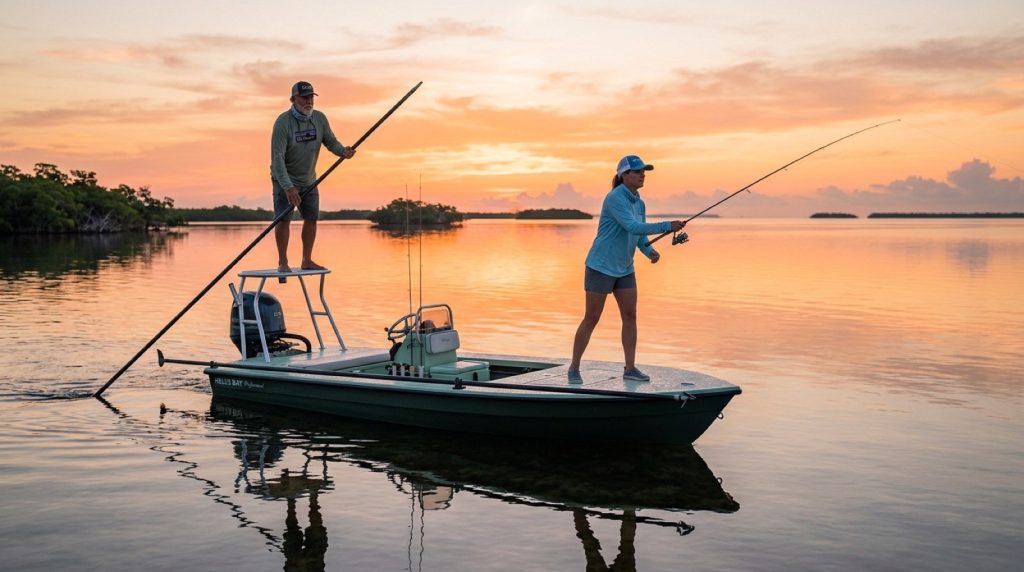
Sample article. Capt. Ray Delgado and his business are fictional. This story shows how a Fishing Gear cover feature will read on the web.
The skiff slides off the trailer at 5:40, twenty minutes before the sky starts to change colour. Ray Delgado does not start the motor. He poles the first two hundred yards, because the fish he is looking for are already in the shallows and they can hear an outboard from a long way off.
Delgado has guided these flats for nineteen years. He reads the water for nervous bait, a push of water, the copper flash of a tail breaking the surface. His clients call it luck. He calls it the last two hours of a falling tide.
“You don’t find redfish. You find the water they want to be in.”
Reading the flat
Before the first cast, Delgado talks his clients through what they are about to see: where the tide is going, which edge of the grass the fish should be working, and why a long, quiet cast matters more than a fast one.
The quiet hour
The first hour is the one Delgado protects. No radio, no motor and no hurry. He wants his clients to hear the flat before they fish it: mullet flipping, a heron working the edge, the hiss of bait running from something bigger.
Some mornings the fish are there and some mornings they are not. Delgado is plain about that with every client who books. What he can promise is a day spent on the right water at the right stage of the tide.
What other guides notice
Capt. Hank Morrow, who recommended Delgado to the magazine, says what stands out is how much of the day is set up before anyone picks up a rod. The skiff is rigged the night before, the tide is charted, and the plan has a fallback for when the wind turns.